



Japan is a beautiful tourist destination with full old-style tradition, with a mix of futuristic innovation. On one side, Tokyo displays the modern style brilliance while Kyoto has its nation’s preserved timeless soul. To get into the depths of Japan’s spiritual side, culture, history, and aesthetics, Kyoto gives an authentic experience.
Kyoto depicts the cultural as well as emotional journey. Every garden, bamboo path, castle, and temple has stories from 100 years ago.
Going ahead, we will come across the major tourist attractions of Kyoto, giving an ultimate Japanese cultural experience. All the tourist attractions will give a 360-degree view of Kyoto from a perspective. Starting from samurai culture, zen philosophy, nature, royal history, and architecture.
1. Nijō Castle — Explore Japan’s Samurai Era of Grandeur
Recommended Duration: 50 Minutes
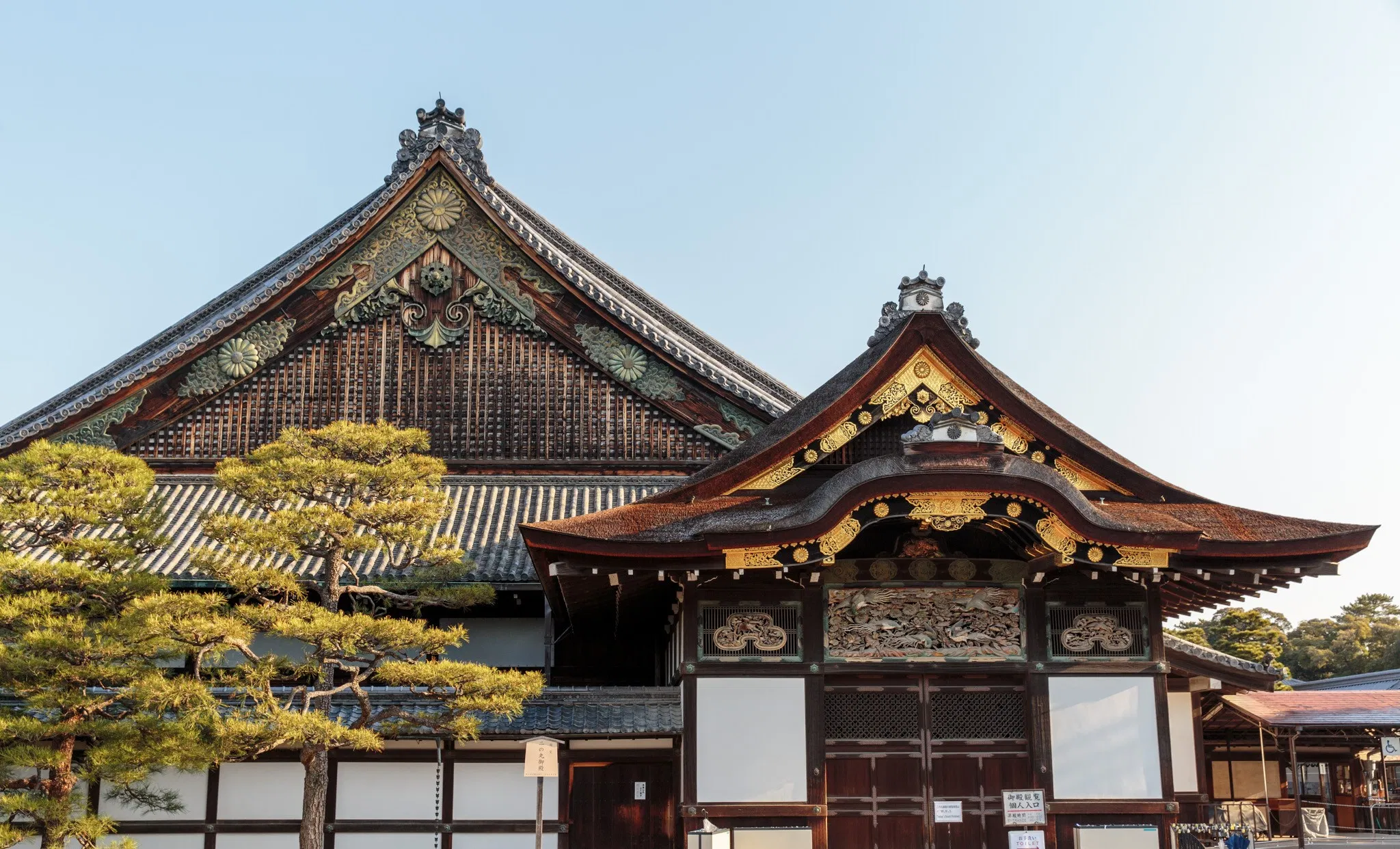
Nijō Castle, as a tourist attraction in Kyoto, Japan, is a beautiful mark of political transformation. It was built by Tokugawa Ieyasu in 1603. During the Edo Period, this castle was used to reside by the Kyoto residence of the Tokugawa family.
The moment visitors get to enter this castle, they feel like entering the samurai rulers’ world, their aristocratic Japanese lifestyle, and military strategy.
Why Tourists Should Not Miss Nijō Castle
A Living Representation of Samurai Japan
There are many castles globally that emphasize military defense. But Nijō Castle is a powerful blend of artistic beauty. The architecture displays discipline, elegance, and authority altogether.
Inside the castle, visitors can look for:
- Gold decorations in the form of ornaments
- Interesting wall paintings
- Tatami rooms
- Huge gates and stone walls
- Great defensive systems to detect intruders
One visiting the Nijō Castle should not miss the great “nightingale floor”. This is a beautiful wooden floor chirping when someone walks upon it. It is designed in an international style to make guards aware of the unwanted visitors. This one feature showcases the elegance of Japanese architecture, full of security, craftsmanship, and security.
A UNESCO World Heritage Experience
If you are a history lover, an architecture lover, or a photographer, Nijō Castle will give you an in-depth immersion into the culture. It gives visitors a way to imagine how the Japanese rulers used to govern the nation.
The history is still alive and not distant at Nijō Castle.
Best Time to Visit Nijō Castle
Spring (March–April)
Cherry blossoms bloom around the castle gardens, and it is the best time to witness the breathtaking view.
Autumn (November)
There are maple leaves that turn the castle environment into an energetic red-and-gold masterpiece.
Early Morning
The castle becomes more peaceful before tourist crowds arrive.
How Tourists Should Explore Nijō Castle
- Spend the majority of the time in palace halls.
- For a better understanding of historical significance, use an audio guide.
- Notice the small architectural details.
- Spend the majority of the time in the gardens for photography.
For an amazing experience, don’t just capture; instead, have an understanding of Japan’s transition from imperial influence to samurai governance.
2. Kinkaku-ji — Witness Japan’s Golden Beauty

Recommended Duration: 45 Minutes
Kinkaku-ji is famous and is best known as the Golden Pavilion. It is fully wrapped in the golden leaf and has a reflective pond. To many visitors, this temple looks unreal in person. This tourist attraction in Kyoto, Japan, is a reflection of Zen philosophy, Japanese aesthetics, and Japan’s in-depth relationship with nature.
Why Tourists Should Not Miss Kinkaku-ji
A Symbol of Perfect Harmony
The temple’s reflection on the pond changes throughout the day depending on sunlight, wind, and seasons. Every visit offers a slightly different visual experience.
It also demonstrates the harmony with the natural environment, with its beautiful architecture.
Spiritual and Cultural Importance
Originally built as a retirement villa for shogun Ashikaga Yoshimitsu, the site later became a Zen Buddhist temple.
At the time of construction, Kinkaku-ji was established as a retirement villa for the shogun Ashikaga Yoshimitsu. After some time, this site looked like a Zen Buddhist temple. The overall structure of the site showcases Peace, Simplicity, Balance, and Reflection.
A Different Experience Every Season
Few places in the world transform as dramatically with the seasons as Kinkaku-ji.
- Winter snow creates a magical contrast with the golden exterior.
- Autumn maple leaves create a cinematic atmosphere.
- Spring blossoms add softness and serenity.
- Summer greenery enhances the temple’s reflective beauty.
Visiting Kinkaku-ji, you will experience different sides with the changing seasons:
- In Winters, snow will give a fairyland experience due to the golden and magical contrast.
- In Autumn, a cinematic experience is present due to the maple leaves.
- Spring gives a soft, serene, and spring blossom experience.
- In the summer, there is a lush green area that enhances the reflective beauty of the temple.
Best Time to Visit Kinkaku-ji
Winter
Watch the snow-covered Golden Pavilion.
Early Morning
Before the arrival of a big group of visitors, the surroundings look spiritual and calmer.
Late Autumn
Witness the dramatic visual beauty of the red maple leaves.
How Tourists Should Explore Kinkaku-ji
- Take a round around the reflection pond.
- Capture moments in hearts instead of cameras.
- Check the Zen garden design philosophy.
This tourist attraction is amazing to admire emotionally.
3. Kyoto Imperial Palace — Witness the Elegance of Japan’s Royalty
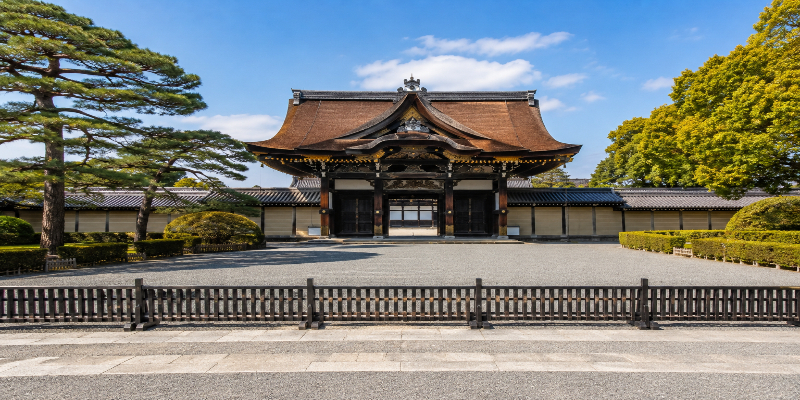
Before Kyoto was declared as Japan’s capital, it was Japan’s imperial center for more than a thousand years.
Till 1868, the Kyoto Imperial Palace was used as a home by Japan’s emperors till then, the capital was shifted to Tokyo. In comparison to other temples and castles, Kyoto has an entirely different atmosphere.
Rather than military strength, the Kyoto Imperial Palace showcases sophistication, refinement, and aristocratic elegance.
Why Tourists Should Not Miss the Kyoto Imperial Palace
Understanding Japan Beyond Samurai History
Many tourists often link samurai culture and Japanese history. On the other hand, this palace shows the equality of the imperial heritage of Japan.
The palace showcases:
- Old-style court culture
- Lavish ceremonies
- Classical Japanese aesthetics
- Minimalist architectural elegance
Extraordinary Simplicity
When the Kyoto Imperial Palace is compared to the European palaces, the Kyoto palace is shown to follow Japanese principles of beauty. Sliding doors, natural colors, and the open spaces tend to create a more calming environment.
Best Time to Visit Kyoto Imperial Palace
Spring
To experience the beauty of the palace, spring is the best season as plum and cherry blossoms get enhanced.
Autumn
Perfect for experiencing colorful trees and weather in a more peaceful setting.
How Tourists Should Explore the Kyoto Imperial Palace
- You can join guided tours.
- Look into the details of the architecture.
- Take a walk through Kyoto Gyoen Park afterward.
It is better to enjoy this palace slowly.
4. Jōjakkō-ji — Kyoto’s Hidden Spiritual Treasure
Recommended Duration: 30 Minutes
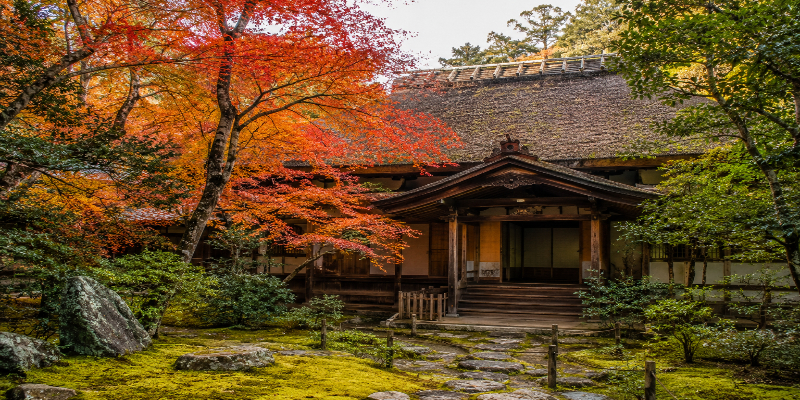
There are many travel attractions in Kyoto, Japan, that are considered top tourist destinations. However, Jōjakkō-ji provides that every traveler looks for emotional connection and silence. The Jōjakkō-ji is situated on Mount Ogura’s hillside in the Arashiyama district.
Why Tourists Should Not Miss Jōjakkō-ji
A Peaceful Escape from Tourist Crowds
At Jōjakkō-ji, you will find tranquility.
Visitors experience:
- Less crowded stone pathways.
- Stairs covered with Moss.
- Forest environment.
- Soothing temple bells.
- Scenic Kyoto views.
At this temple, you will find an amazing meditative atmosphere to connect with yourself deeply.
One of Kyoto’s Best Hidden Autumn Spots
During the autumn foliage season, this temple looks amazingly stunning with a lot of maple leaves in the pathways. As per the photographers, this place is an underrated gem.
A Spiritual Experience
Even non-religious travelers often describe feeling emotionally calm here. The combination of nature and silence reflects the essence of Zen philosophy.
Many of the non-spiritual visitors tend to feel emotionally relaxed here. At Jōjakkō-ji, there is a great combination of silence and nature showcasing Zen philosophy.
Best Time to Visit Jōjakkō-ji
Late November
The autumn colors are extraordinary.
Early Morning
The temple feels peaceful and almost untouched.
Rainy Days
Wet stone paths and mist create magical scenery.
How Tourists Should Explore Jōjakkō-ji
- Walk slowly and quietly.
- Spend time observing nature instead of rushing.
- Wear comfortable shoes due to the hillside paths.
- Combine the visit with nearby Arashiyama attractions.
This is one of Kyoto’s best locations for mindful travel experiences.
5. Sagano Bamboo Forest — Japan’s Most Dreamlike Landscapes
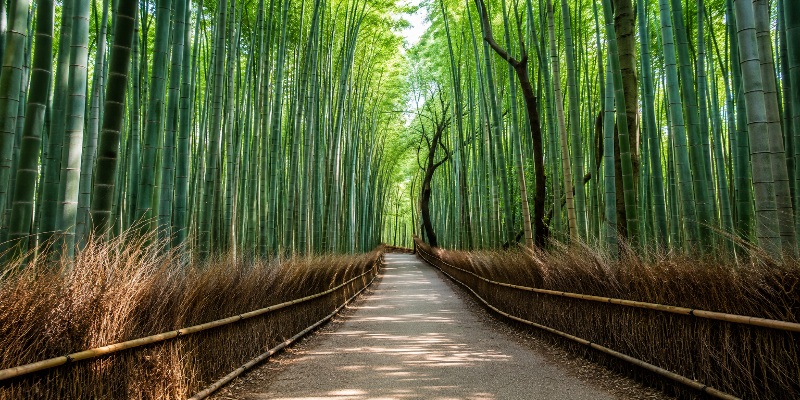
This one tourist destination in Japan is the most recognized one. However, the photographers have been unable to capture the ultimate experience in the camera beneath the towering bamboo stalks. The surroundings and the atmosphere are surreal.
Why Tourists Should Not Miss Sagano Bamboo Forest
A Complete Sensory Experience
This tourist attraction is not just visually beautiful. Whenever the wind passes through the bamboo, tourists get to hear the soft rustling sounds, giving a very calming effect. In fact, Japan has recognized this sound as the most protected soundscape.
A Unique Natural Beauty
The tall green bamboo creates natural symmetry and depth, unlike ordinary forests.
With the green bamboo, you get a natural symmetry and something different from other ordinary forests.
Here, the grove showcases:
- Japan’s minimalism
- Natural harmony
- Peacefulness
- Simplicity
A Photographer’s Paradise
Bamboo’s vertical lines create an extraordinary chance for cinematic videos, social media content, and photography.
Best Time to Visit Sagano Bamboo Forest
Sunrise or Early Morning
In the daytime, there is a lot of crowd that makes it difficult to explore.
Spring and Autumn
During this season, the temperature is pleasant and more enjoyable for walking.
Late Afternoon
The best time to capture moments is when there is soft lighting.
How Tourists Should Explore Sagano Bamboo Forest
- Don’t rush; rather, explore slowly.
- Rent a bicycle around Arashiyama.
- Roam around nearby riverside areas.
The bamboo’s beauty lies in the emotional immersion instead of a checklist of tourism.
6. Tenryū-ji — Witness the Zen Heart of Kyoto
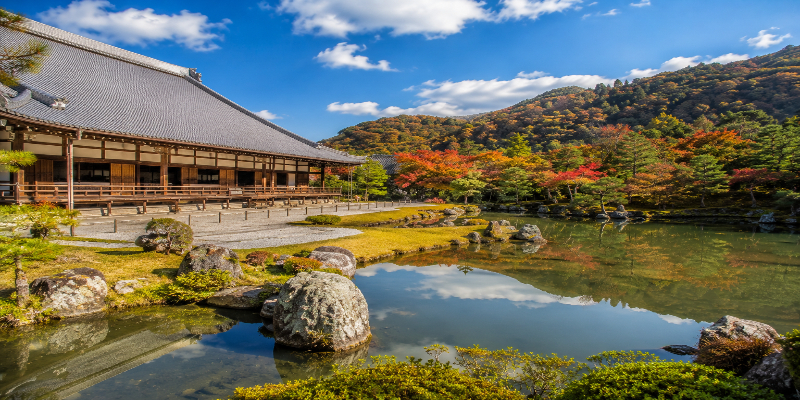
Recommended Duration: 30 Minutes
Tenryū-ji Temple was established in 1339 and was considered to be architecturally beautiful amongst all the UNESCO World Heritage Sites and Zen Temples.
Why Tourists Should Not Miss Tenryū-ji
One of Japan’s Greatest Zen Gardens
- This temple still holds that same charm, and nothing has changed.
- The design uses “borrowed scenery,” where surrounding mountains become part of the visual composition.
- The design of the Tenryū-ji Temple has borrowed scenery, and here the surrounding mountains are a part of the visual composition.
A Blend of Architecture and Nature
Tenryū-ji is a demonstration that Japanese temples have landscapes, but they don’t overpower them.
Spiritual Calmness
Visiting here, tourists get to find encouragement that’s mindful. One gets to find mental clarity from the chaos of thoughts.
Best Time to Visit Tenryū-ji
Autumn
In this season, there is brilliance in the foliage that gets reflected in the pond.
Spring
A sense of serenity is created due to the blossoms and fresh greenery.
How Tourists Should Explore Tenryū-ji
- Sit around the garden pond and find peace.
- Witness the mountain scenery.
- For an immersive route, step into the bamboo grove side.
- Capture the surroundings with your eyes instead of getting into the hassle of taking photos.
How to Explore Kyoto’s Attractions in One Day?
Morning Schedule
- Sagano Bamboo Forest
- Tenryū-ji Temple
- Jōjakkō-ji Temple
Afternoon Schedule
- Kinkaku-ji Temple
- Nijō Castle
- Kyoto Imperial Palace
Final Verdict: Why These Kyoto Attractions Define Japan
These six attractions together offer a complete understanding of Japan. Visiting Kyoto’s tourist attractions, you will get a complete understanding of Japan. If we look from a 360-degree perspective, you get to delve into Japan's history, culture, spirituality, architecture, and natural beauty. Kyoto is best explored when experienced fully, walked slowly, and is emotionally remembered.
Suggested Japan Tour - Explore Japan Tour (10 Nights / 11 Days)
Also Read -
- Travel Attractions in Tokyo, Japan
- Osaka, Japan
- Japan: A Journey through cities, mountains, and temples
- Popular Japanese foods
- Tourist attractions in Japan


